From Workflows to Operating Systems: How AI Changed Execution
Dec 12, 2025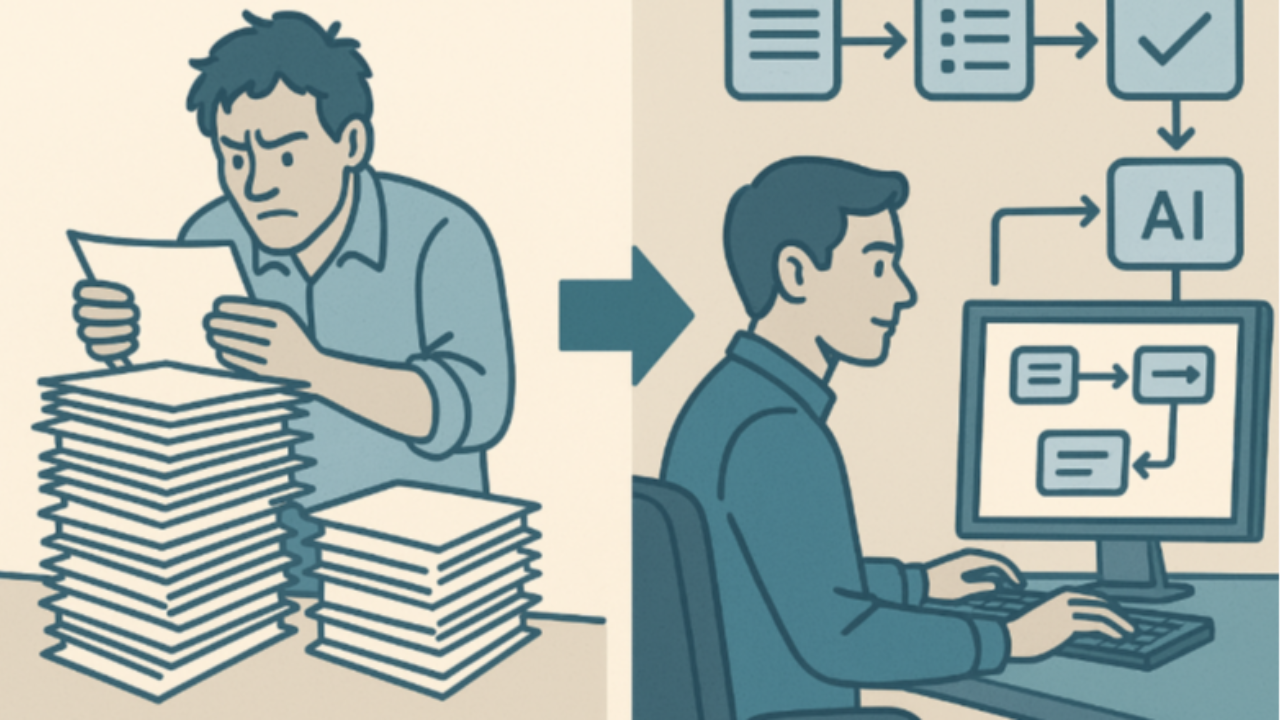
Six months ago, AI tools were improving individual tasks. By December, AI was rebuilding the entire way companies operate. What began as workflow acceleration evolved into something far more significant: AI augmented operating systems.
This shift did not come from hype or prediction. It came from months of observing how real teams executed real work under real pressure. And the pattern was unmistakable. AI impact moved from surface level tasks to deep structural transformation.
June: Tactical Workflows
In June, AI value showed up in simple wins that helped teams move faster.
• Better meeting summaries
• Cleaner planning documents
• Standardized communications
• Faster analysis and prep
These were useful improvements but still linear. AI acted as an efficiency booster, not a system level partner.
December: AI as an Operating System Layer
By December, everything changed.
Teams were running AI across the full operational lifecycle, including intake, triage, drafting, tagging, summarization, prioritizing, and alerting. These were not one off tasks. These were structural components of how work flowed.
The hype narrative claimed that one powerful AI app would automate everything. But real world data showed the opposite. The biggest performance lift did not come from replacing systems. It came from redesigning systems around AI.
This is where companies saw breakthrough gains.
What AI Augmented Operating Systems Delivered
Organizations that redesigned workflows experienced measurable improvement across multiple dimensions.
• Cycle time reductions of 30 to 60 percent
• Higher execution consistency
• Fewer dropped handoffs
• Faster time to decision
• More predictable operational output
These performance gains were impossible to achieve with isolated tools. They only emerged when leaders redesigned pathways and embedded AI at the structural level.
A New Era of Auditable SOPs
December also marked a new maturity shift. Organizations began implementing auditable AI enabled SOPs. These included embedded agents that maintained consistency, flagged risks, and ensured process transparency.
Quality improved. Compliance strengthened. Execution stabilized.
This is the future AI is accelerating us toward. Not automation myths. Not magical all in one systems. But operating systems intentionally redesigned with AI as a core structural layer.
What This Means for Leaders Heading Into 2026
The hype will continue. Promises of total automation will get louder. But the real value is already clear.
Leaders who redesign workflow architecture and adopt systemic thinking will be the ones who scale execution, make better decisions, and outperform competitors.
This thinking is the foundation of the Strategic AI Opportunity Audit. During this process, we map your workflow structure and identify the highest leverage points where AI creates meaningful lift. And in the 90 Day Effectiveness Program, executives learn how to transform scattered workflows into AI augmented operating systems with measurable ROI.
Take the First Step into 2026 with Clarity
If your goal is to enter 2026 with AI embedded workflows that scale performance, you do not need a complex plan to begin. You only need the first intentional step.
I will walk you through an AI Effectiveness Initiative Workflow. This includes one AI Effectiveness Prompt Sequence and one GPT based tool to evaluate and improve the plan you generate.
When leaders shift from tactical tasks to operating system thinking, everything changes.
Your new operating system begins with a single conversation.
Stay connected with news and updates!
Join our mailing list to receive the latest news and updates from our team.
Don't worry, your information will not be shared.
We hate SPAM. We will never sell your information, for any reason.